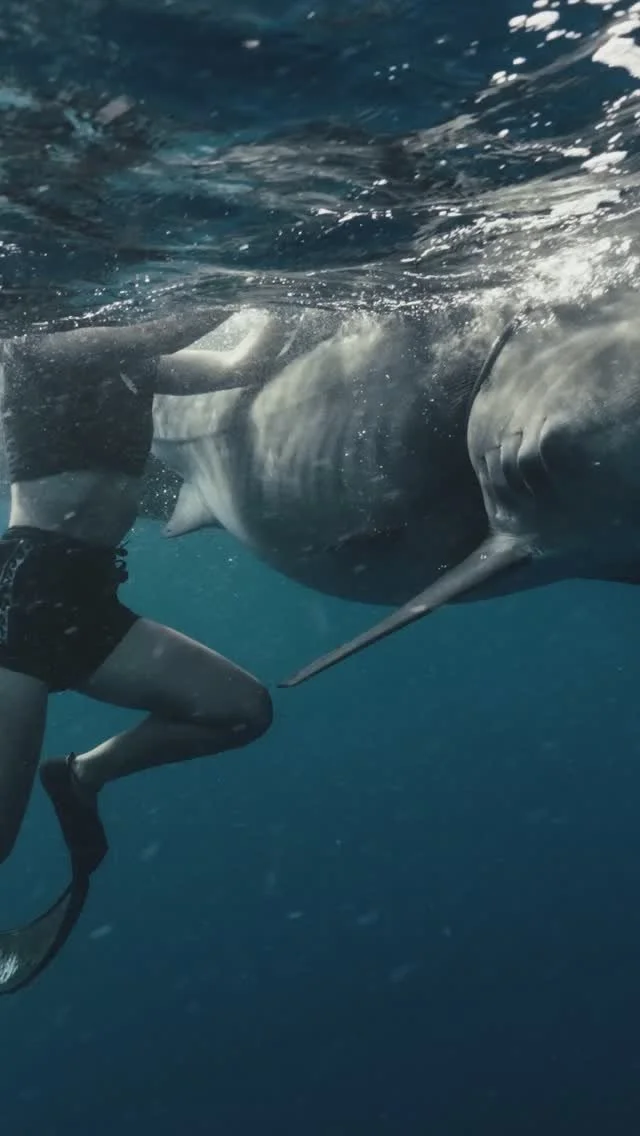


pioneering research
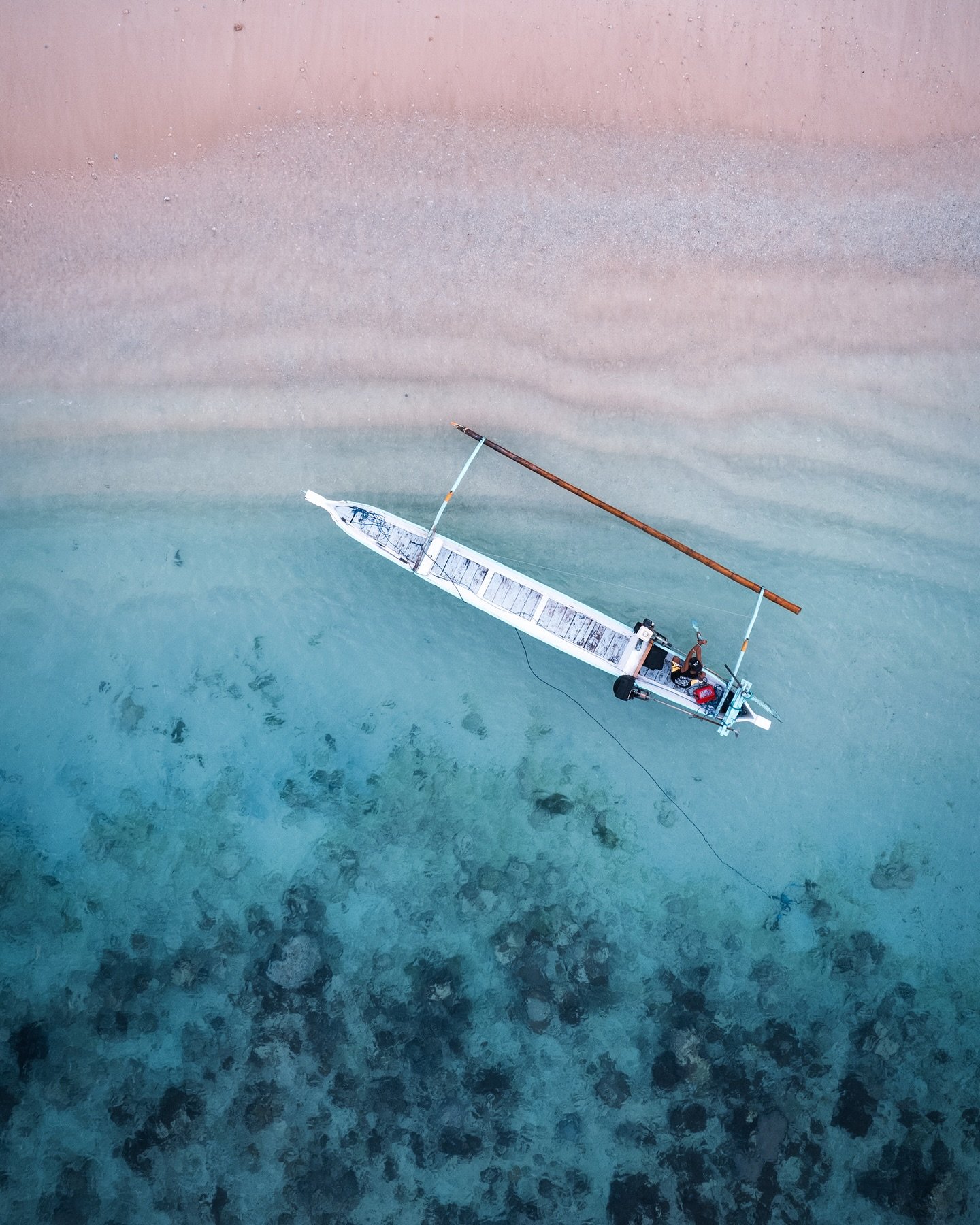
with the help of shark fishermen
-
![]()
surya
MALE, name meaning the sun. The first shark we tagged, enjoys fish and showing us his location.
-
![]()
RAISA
FEMALE, named after the daughter of crew member, Sam. At the risk of fat shaming, she was a big girl.
-
![]()
AZUA
FEMALE, named after the daughter of crew member, Ari. Spends a lot of time at the surface which is great news for us and our data.
-
![]()
SAKILA
FEMALE, named after the daughter of crew member, Harra. Her name is as pretty as her face.
-
![]()
KHALISA
FEMALE, named after the daughter of crew member, Mammar. She expressed great interest in making our life as difficult as possible during release.
-
![]()
SAMARA
FEMALE, named after the daughter of crew member, Manan. Second shark we tagged, likes to travel great distances, has potential to be an influencer.
-
![]()
WESLEY
MALE, named after a very special donor. Wesley is a lucky one of two sharks to receive a miniPAT tag.
-
![]()
FARIS
MALE, names after the son of crew member, Hassan. Did not behave but loves the camera.
-
![]()
EWIK
FEMALE Named after the daughter or Captain Sapuiddin. Either pregnant or training for sumo wrestling
-
![]()
RARA
FEMALE tried to bite us, name after the daughter of Captain Soleh, the daughter also tries to bite us
-
![]()
Shark-ira
FEMALE- Named by an incredible donors daughters, her hips do not lie.
-
![]()
Kingsley
MALE Named for Chelseas fur baby, the best boy in the world & he will never be forgotten
-
![]()
Masri
FEMALE- Largest shark we’ve tagged at 4 meters, named after the sister of Raffi & Josh.
-
![]()
BLADE
MALE Named after the coolest kid we know, son of the coolest shark feeder we know, Chang Chin.
-
![]()
MEDINA
FEMALE Named after Odi’s daughter who was born while we were at sea tagging sharks
-
![]()
FIN DIESEL
MALE Named again by our donors very clever daughters, nothing comes before this sharks family.
-
![]()
asta
MALE Named for Mann’s son, the last shark tagged on our expedition & a true fighter.




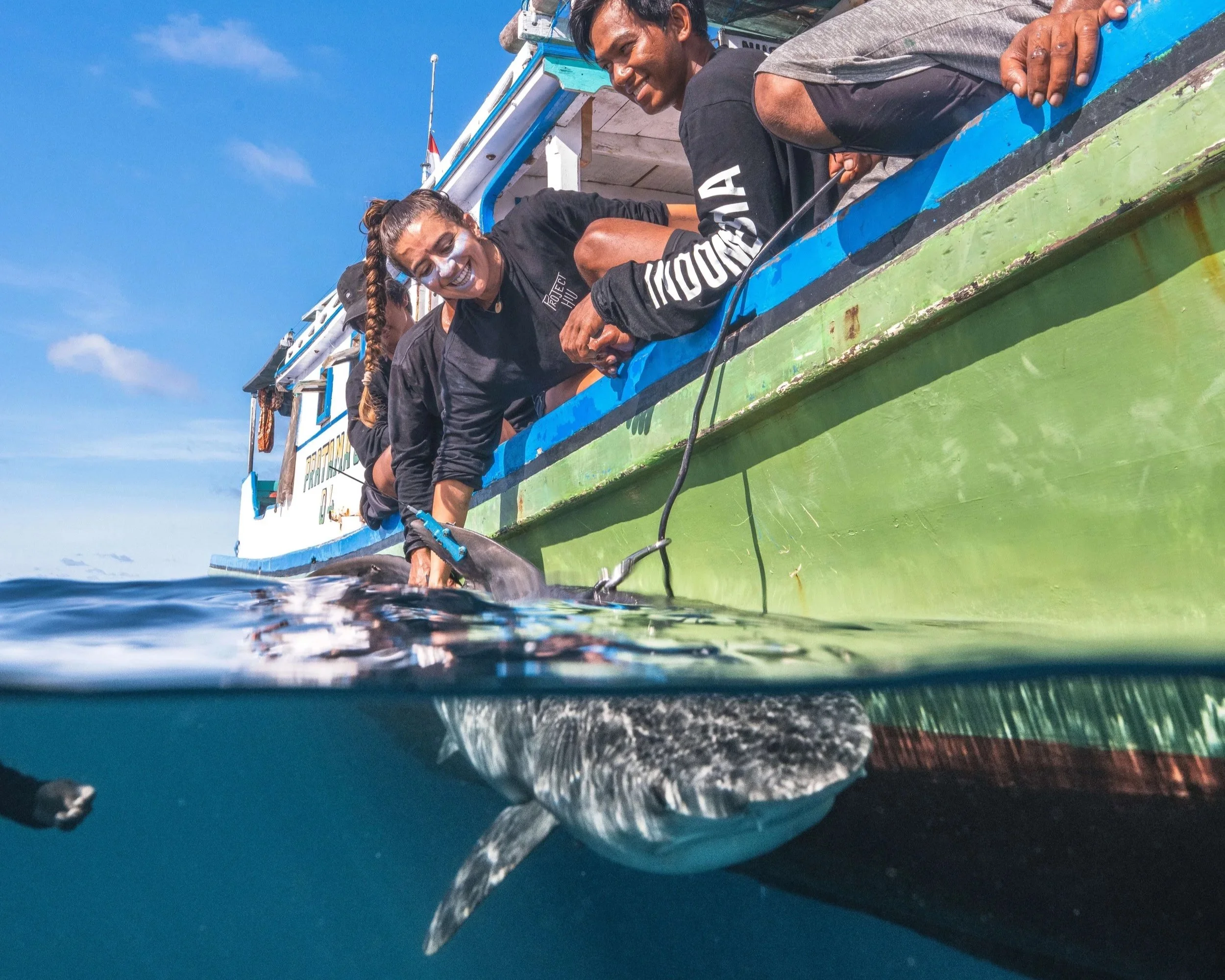
why tag sharks?
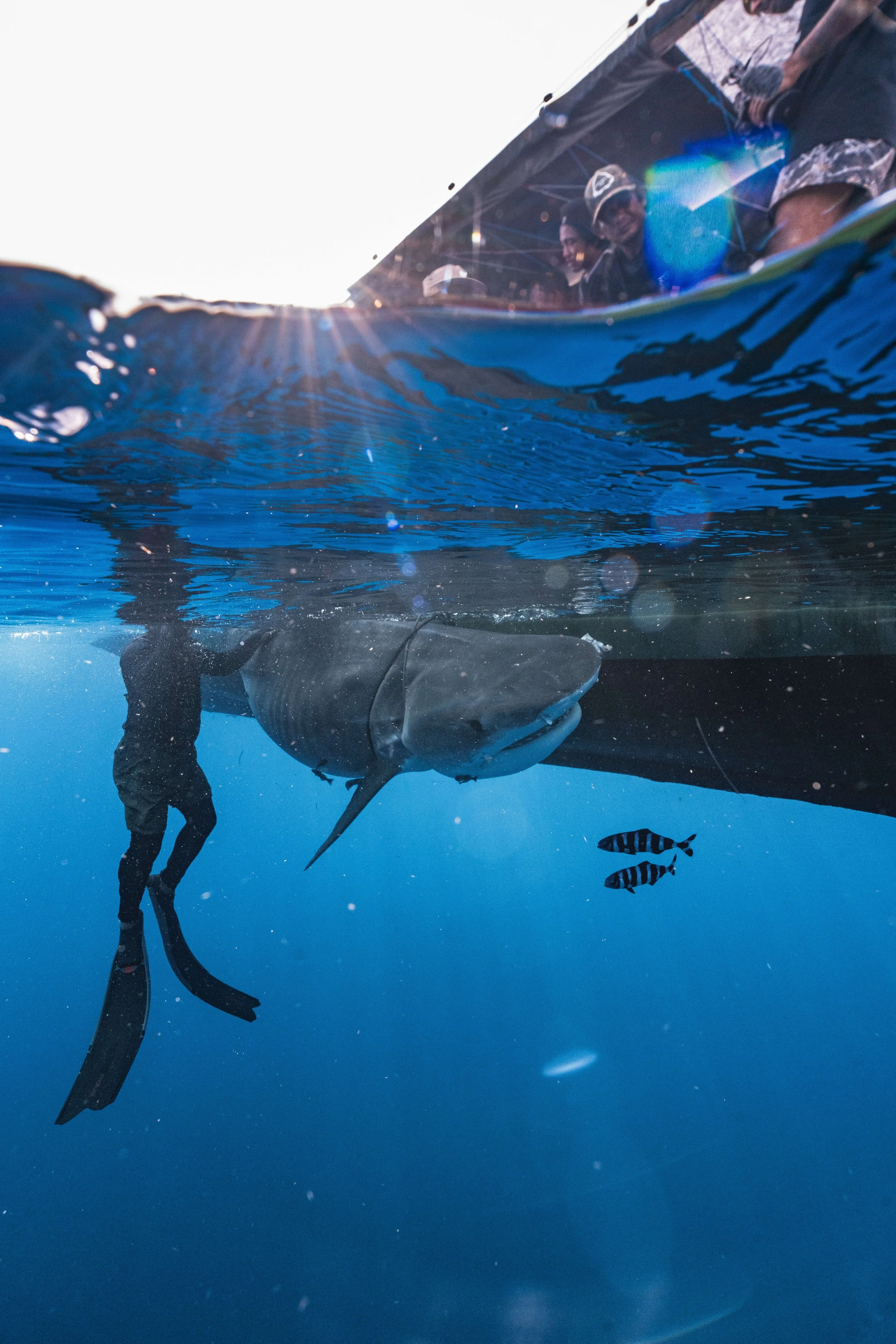
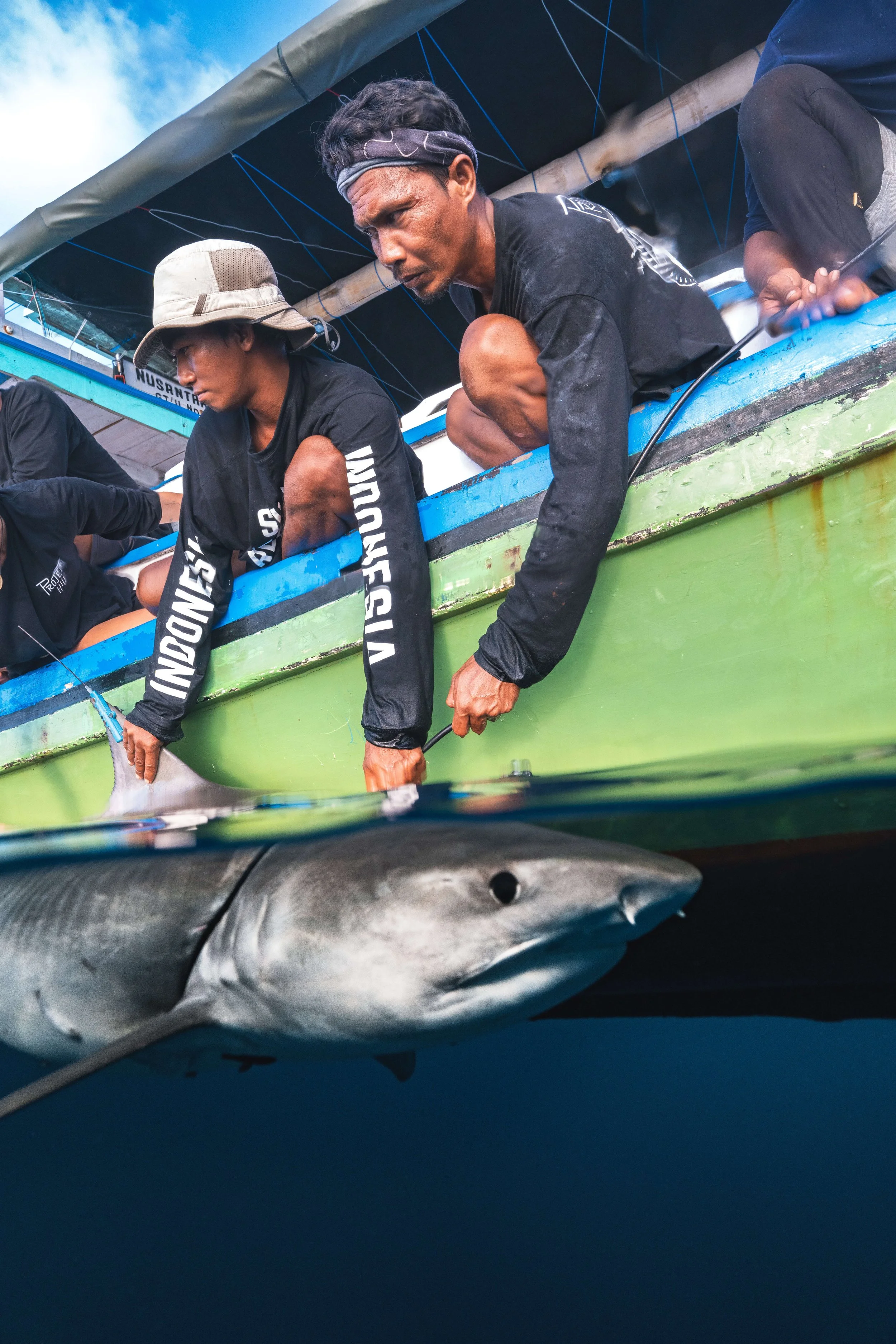
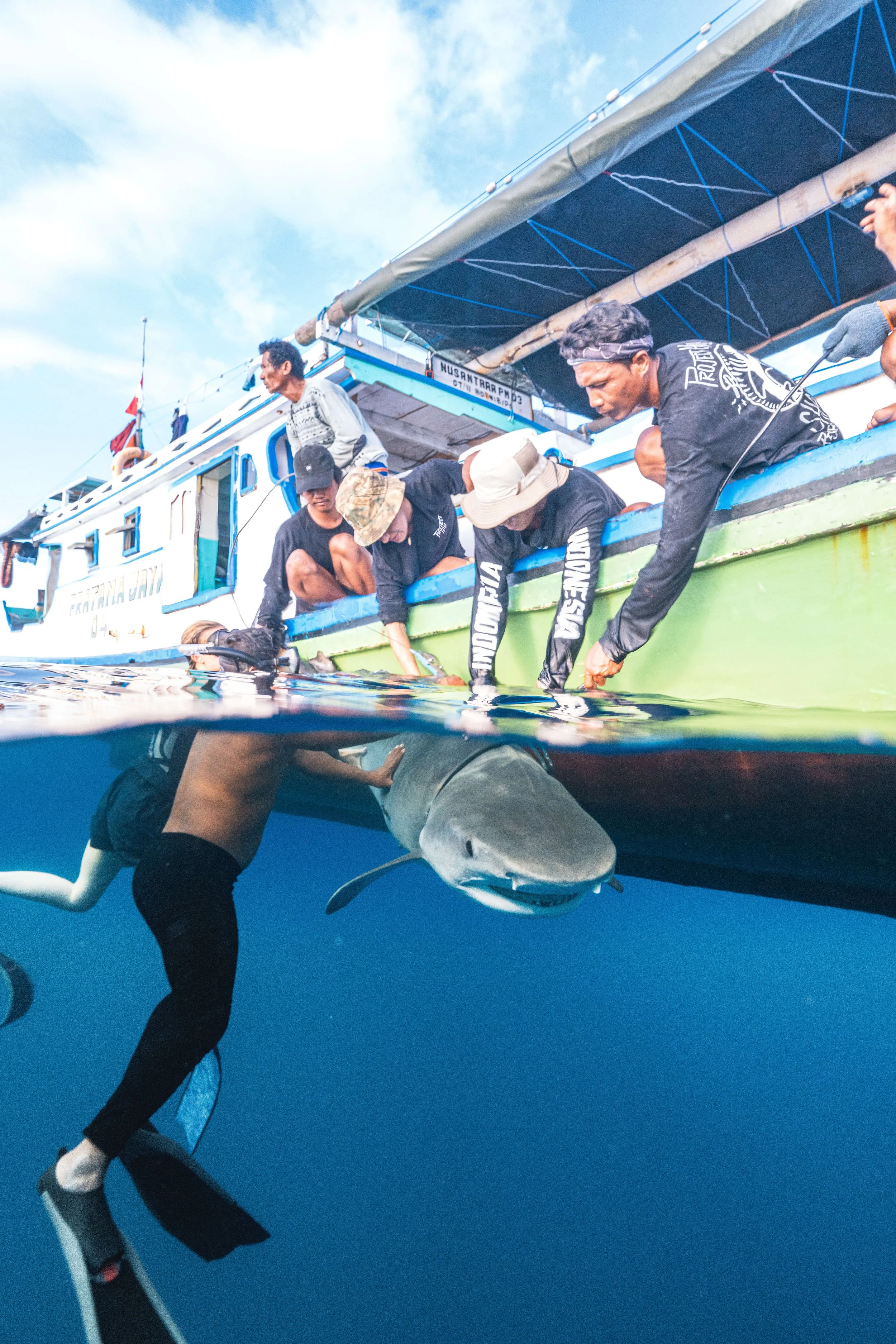
While some marine protected areas exist in Indonesia, they are few and far between and were not designed with sharks in mind. Satellite tracking will provide a glimpse into the daily lives of sharks, revealing what areas in Indonesia they frequent. We will be able to determine what environmental factors (sea surface temperature, currents..etc) they prefer, and predict their future movements based on this new knowledge. A study of this magnitude has never been conducted here before, and our research will provide novel insights into the behaviour and life history of Indonesian sharks.
To date our tagging expeditions have employed 5 different vessels & prevented 13 fishing trips, saving more than 700 sharks from slaughter.
-
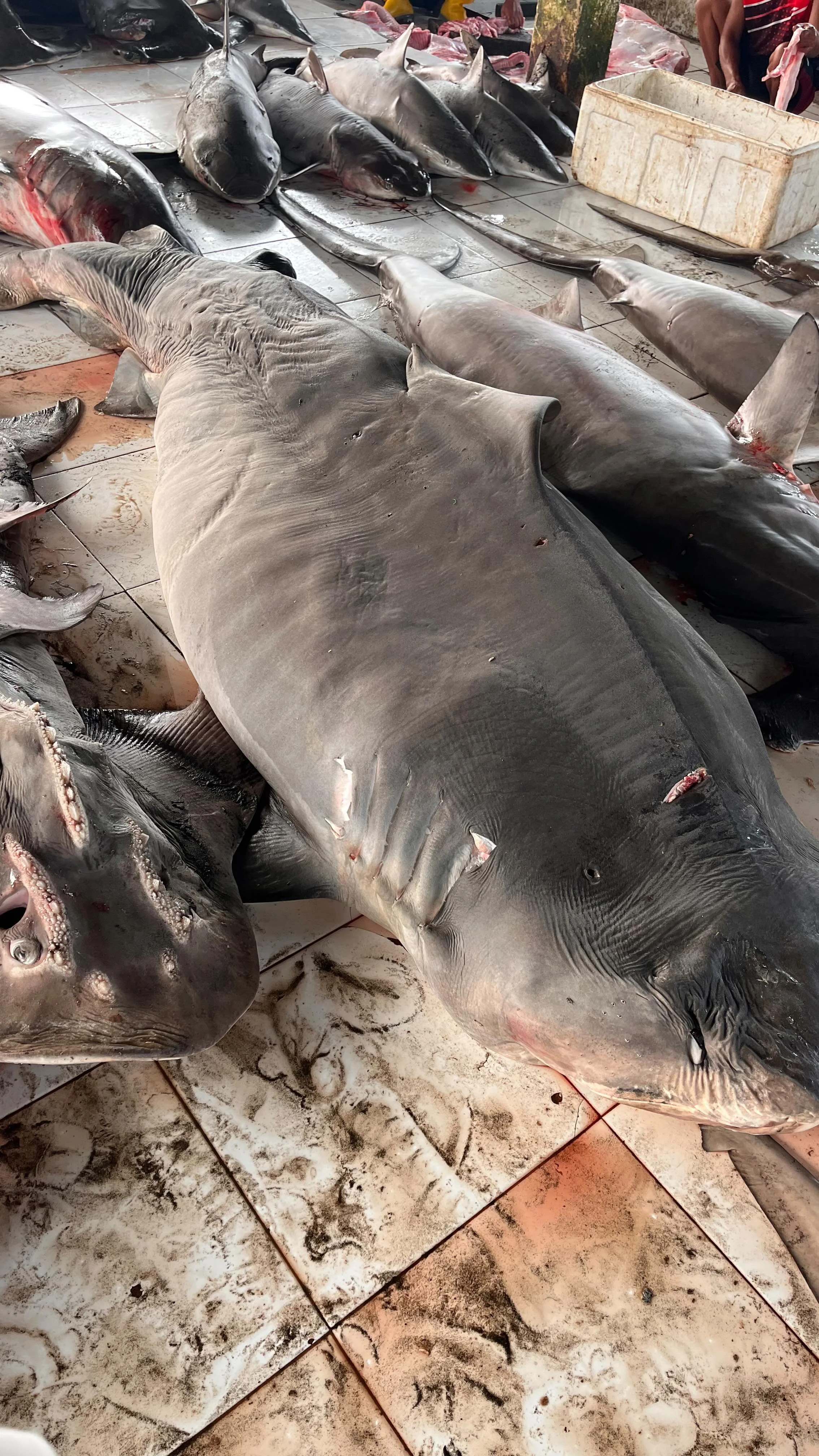
Indonesia is home to over 25% of the world’s known shark species and serves as a hotspot for marine biodiversity. Unfortunately, it is also home to one of the most heavily fished areas of the ocean and is one of the most dangerous places to be a shark. Many shark species are slow growing, taking decades to mature before reproducing. As profitable targets for the fin trade, sharks are often captured and killed before they can give birth to the next generation of sharks. Unable to reproduce faster than they are being fished, shark populations have declined by 70% over the last 50 years and are in a constant battle against extinction. As top predators, sharks keep our oceans healthy through a “trophic cascade”, balancing out underwater environments. The loss of sharks in ocean ecosystems will be fatal to a multitude of marine species and cause rippling effects that we would feel on land, including a decline in healthy fish stocks that most of the world relies on for economic stability.
-
The clock is ticking for sharks and to protect them we need to understand their movements to determine where to focus conservation efforts. Through tracking endangered sharks, we will be able to monitor their movements over time and identify areas critical to their survival such as feeding and mating grounds. The identification of these areas will become highlighted as potential protected areas restricted from fishing, protecting sharks when and where they need it most. We have already made history by tagging the first tiger sharks ever in these waters, with our work even more unique through our partnership with the Indonesian shark fishermen themselves. While we work to understand shark movements, we also work to change the relationship that locals have with sharks to mitigate the threat at the source. The men who once fished and killed these sharks are now helping to save them.
-
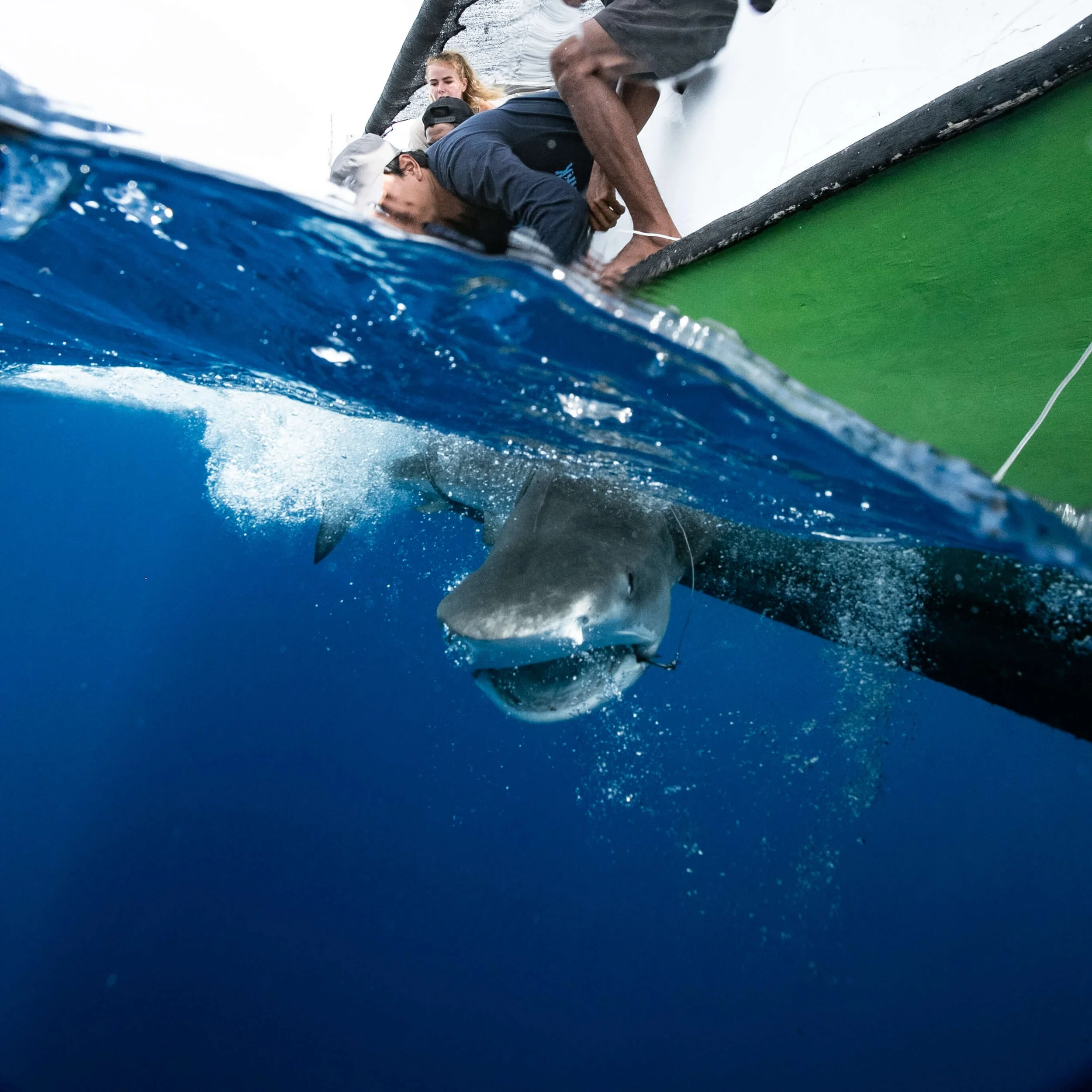
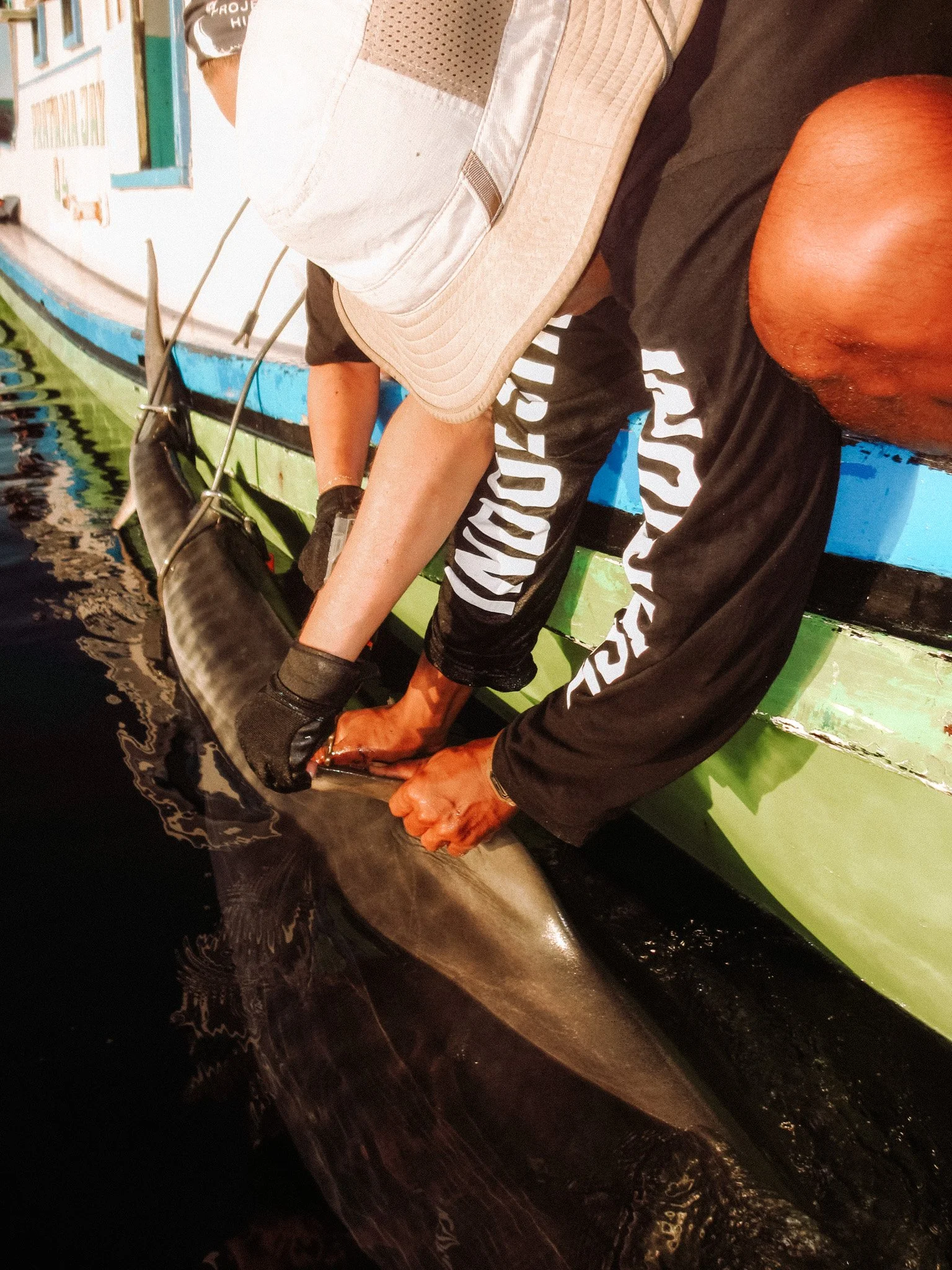
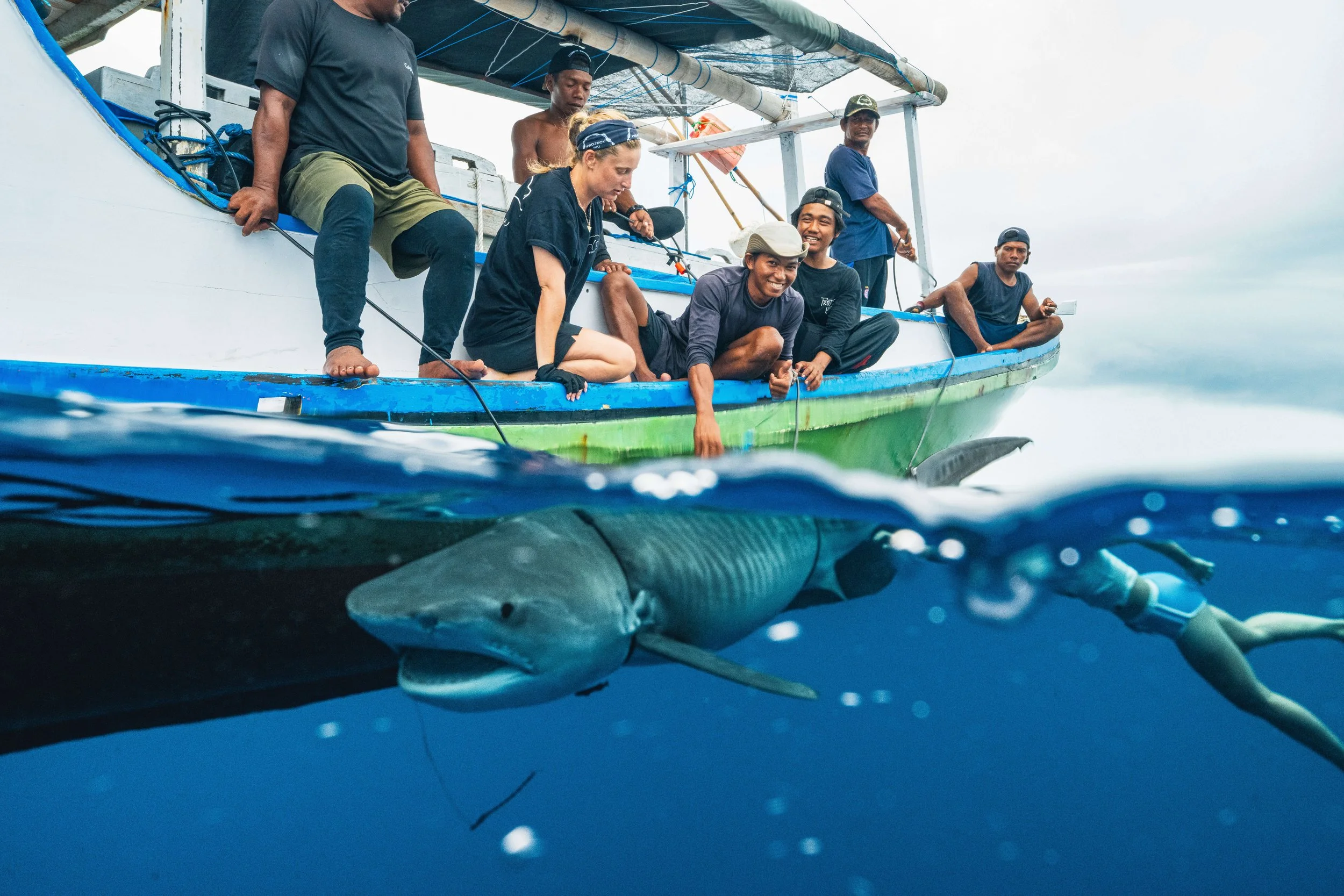
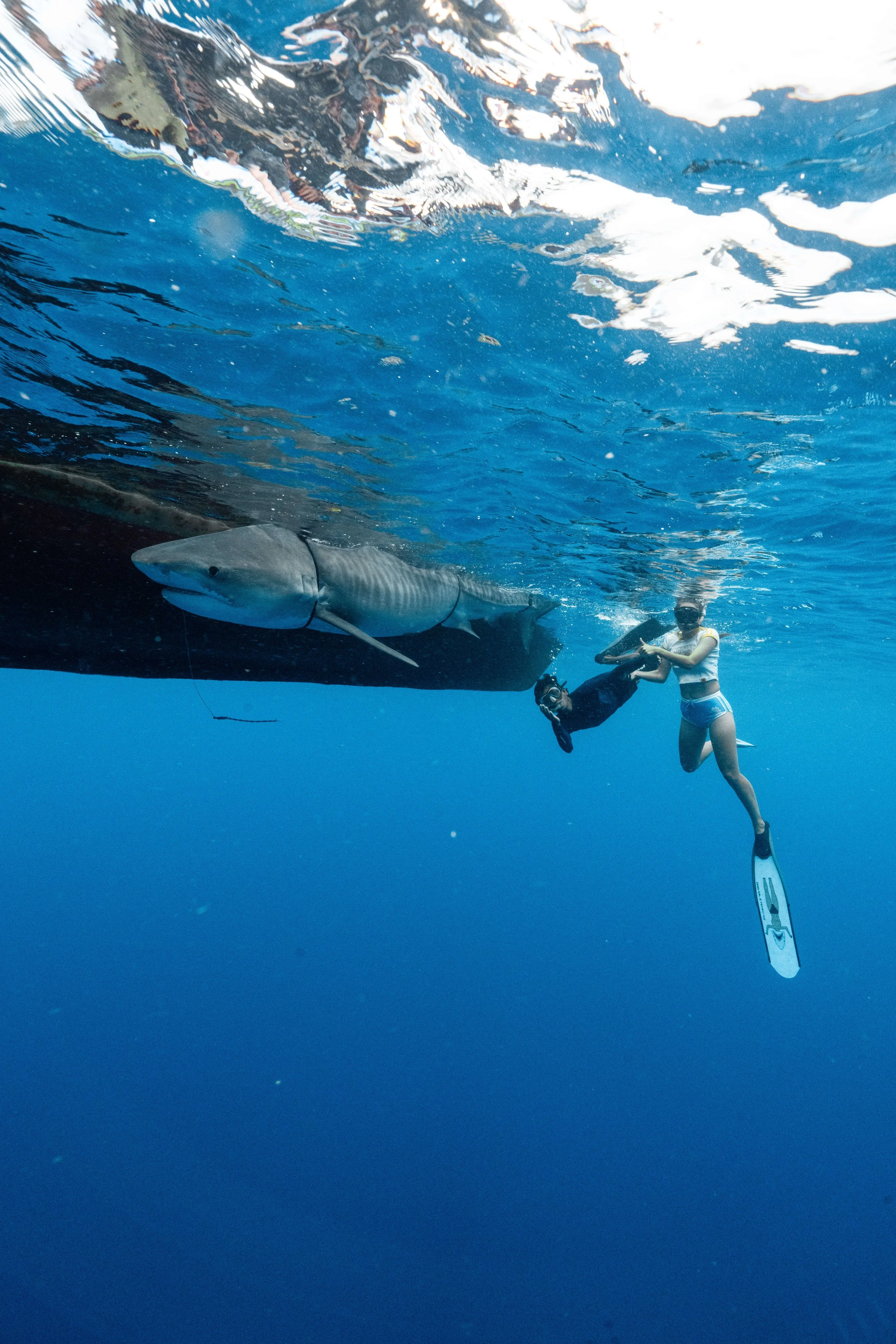
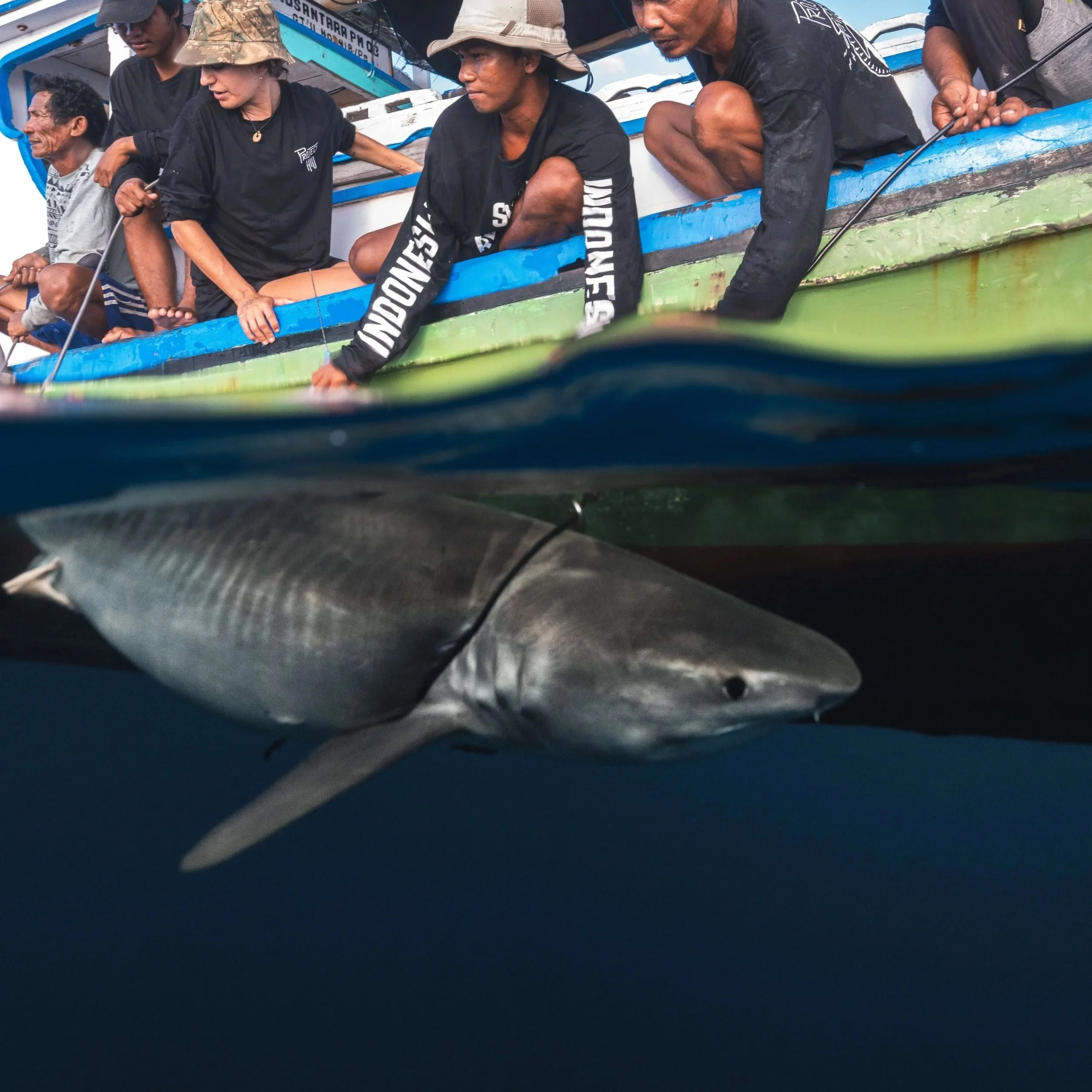
To tag sharks we need to fish sharks- so we basically follow the fishermen’s lead (with a few changes to their equipment to ensure the sharks best chance of survival upon release). Once caught, we secure the sharks to place the tags and then release them. We do our best to only catch the sharks we want to tag and release the others. Without our research, these sharks would be killed for the fin trade & without the fishermen, we would never know where to find the sharks…
-
Tiger sharks present a population of sharks with the best chance for survival when it comes to fishing in this area, although they are fished, they aren’t directly targeted as their fins are of low value. So choosing them gives our data the best chance for survival. We’ve also taken steps to ensure the maximum survival rate of our sharks, offering rewards for the release of tagged sharks and communicating with the select vessels fishing in the area. Tigers are known to be highly migratory, hopefully this means a short amount of time spent in the dangerous zone where they can be fished. But of course it’s a risk we are aware of, and will spend everyday hoping our sharks do not fall victim to a monstrous trade that’s decimating our oceans.
-
It’s important to remember why this research is possible, it’s because fishermen take us to the places sharks are still thriving so we can tag them, they know the spots already. Our job becomes identify why and how the sharks use these areas and ways we can protect them. It’s also impossible for the fishermen to track these sharks live & go catch individuals based off the data.
-
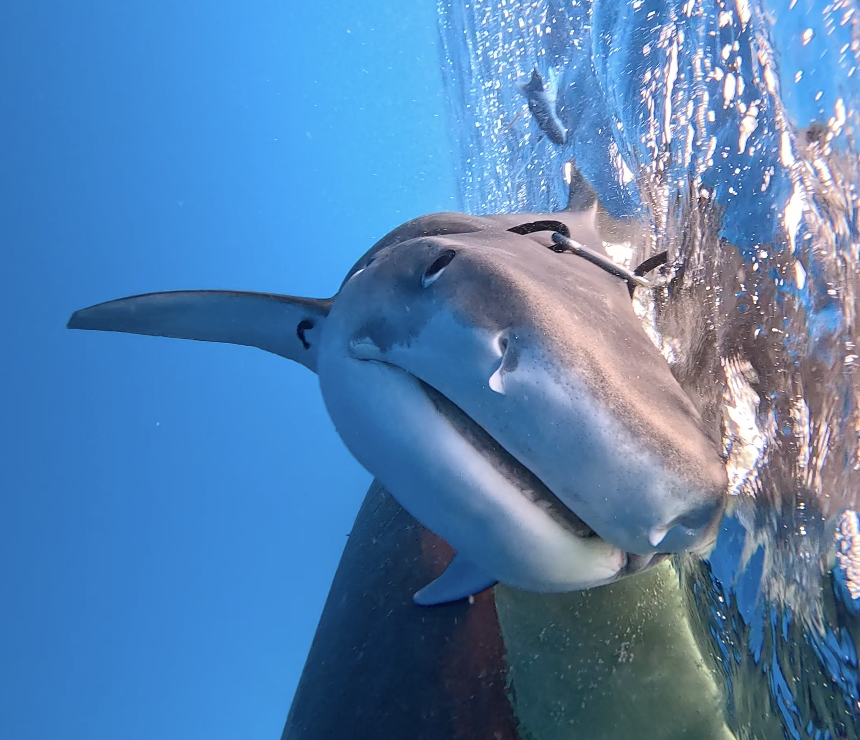
Shark tagging is designed to be a safe, minimally invasive research method that does not harm the shark. Tags are attached externally or briefly implanted using techniques similar to a small biopsy, causing only minor, short-term discomfort. The process is carried out by trained researchers following strict animal-ethics protocols, and sharks are released immediately after tagging. Decades of research show that tagged sharks continue to feed, migrate, reproduce, and behave normally, providing vital data that helps protect their populations and the ecosystems they support.
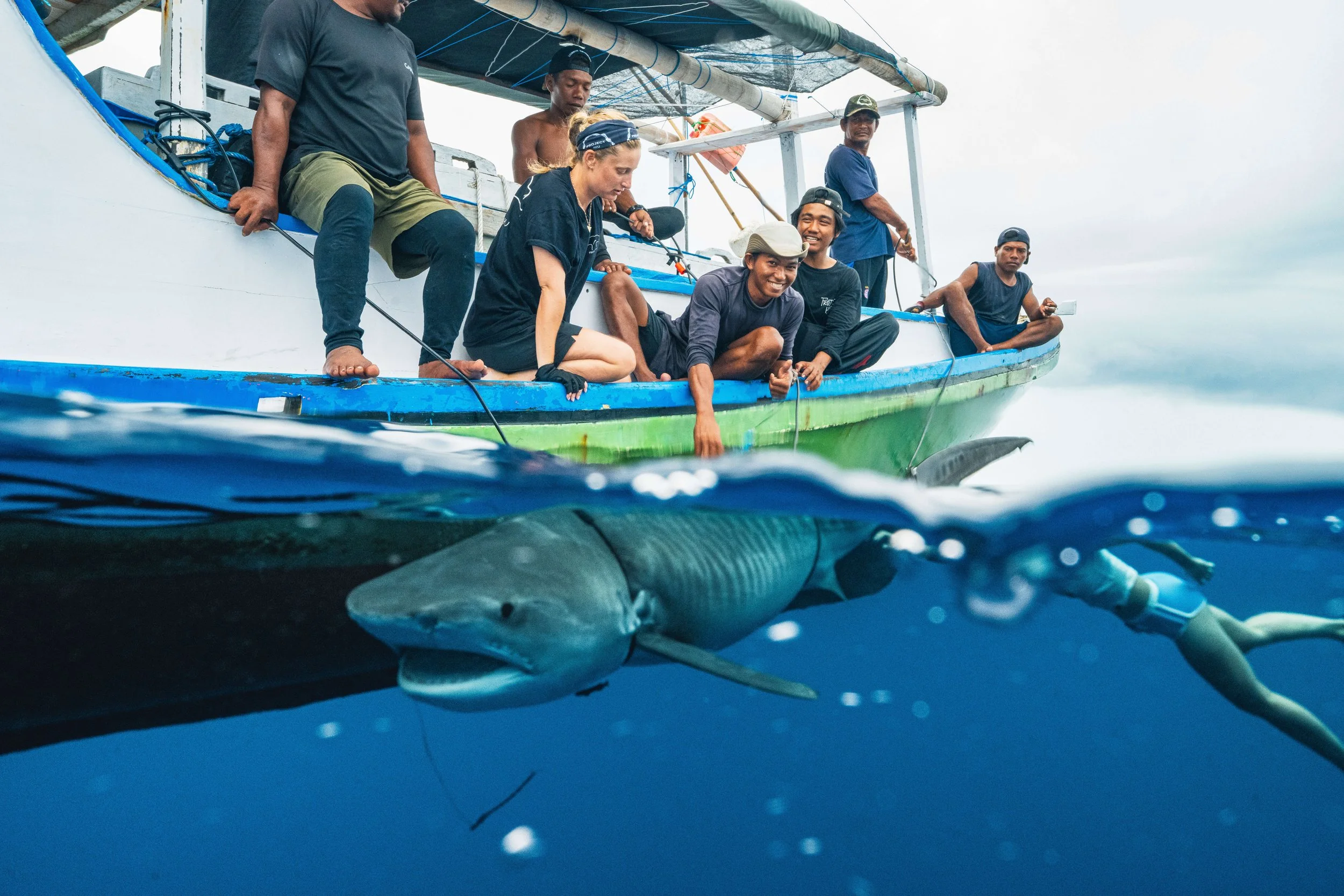
HELP US tag MORE SHARKs…
MiniPAT tags allow us to gather more information than just satalite tags... we can get insights into not only movement, but also temperature & depth. The additional data makes these tags a little more expensive! Please donate to help us obtain the tags we need and research the oceans most at risk shark species!
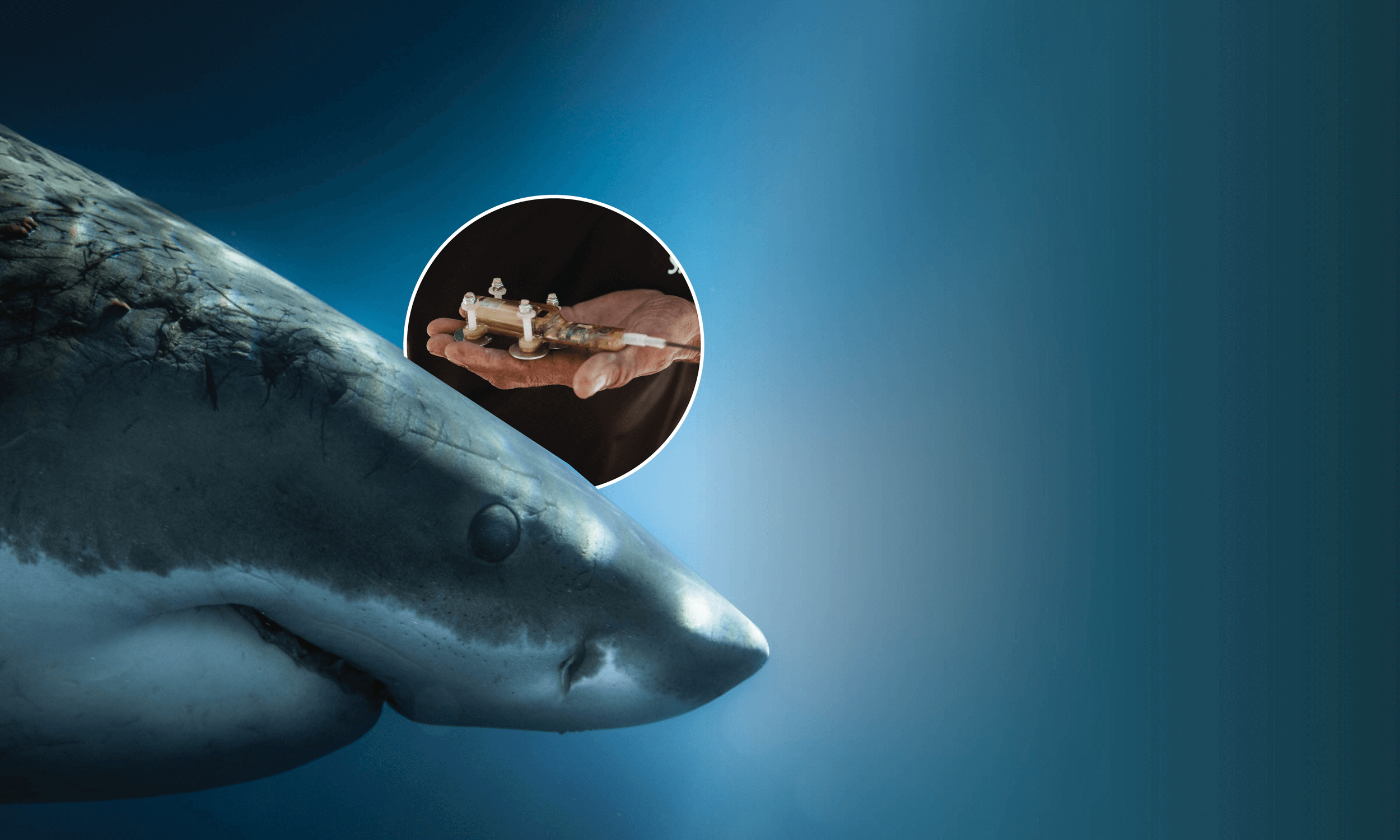
more THAN TAGGING…
read about our groundbreaking GREAT WHITE SHARK DISCOVERIES…
follow to stay up to date on the latest.